Around the United States, colleges and universities commonly experience issues related to curriculum changes, rising tuition costs and housing availability. However, a problem that has seen an increase on many campuses is the rise of “ghost students.”
Ghost student enrollment occurs when scammers steal people’s identities to apply to colleges and enroll in classes, therefore posing as a student. The fraudster does not do this for the purpose of getting a degree, but rather takes out thousands of dollars in student loans in the names of the people they stole from.
Since community colleges have easier application processes and lower admission standards compared to other types of colleges and universities, they are more at risk for ghost student enrollment. For example, the San Francisco Chronicle stated that in California, about 20% of community college applications are scams. These schools must accept all applicants with a high school diploma and don’t require anyone to enter a social security number, which dramatically increases the risk for scams.
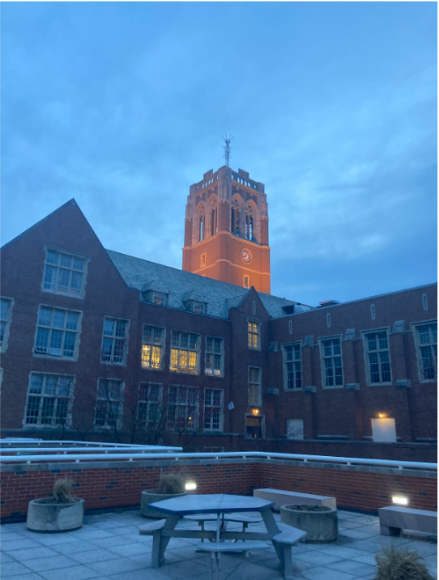
Jim Burke ’91 and ’97G, chief information officer of Information Technology Services at JCU, told The Carroll News that ghost enrollment is “not an issue” at JCU since it is a smaller four-year institution where every community member knows one another. Burke said that “because of our personalized admissions process, we are intimately involved with our applicants and know they are real people.”
When prospective students apply to JCU, departments such as the Offices of Student Enrollment and Financial Services and Admission utilize a system called Slate. It assists with making sure every single person who hands in an application is a real human, primarily by ensuring there are no duplicate records in the system. John Sully, associate chief information officer of Information Technology Services at JCU, told The Carroll News that “our admissions process is a hands-on process” in verifying that there are no fake applications.
“In order to be admitted, you have to have a completed application on file through the university,” said Ryan Mann ‘22 and ‘25G, associate director of admission.
To apply to John Carroll, a student must submit an application through the Common App or Coalition for College. Along with that, at least one letter of recommendation and an official high school transcript must be handed in. The transcript must be given to the university directly by the student’s high school and cannot come from them or a family member.
The majority of JCU prospective students are from public and private high schools, while some come from charter schools and very few are homeschoolers. According to Mann, homeschooled students wanting to apply to John Carroll will have additional requirements to fulfill such as providing the university “with complete and detailed documentation of high school coursework and evaluations of progress from an approved home school evaluator or supervisor” and “verification of high school graduation” prior to enrollment.
Mann stated that examples of red flags in enrollment patterns include email addresses that don’t match the name on record and the student’s address not being remotely near their high school.
“If you’re paying deposits to come to JCU, we know you’re a real human being,” said Burke.
There are consequences for institutions experiencing ghost student enrollment, such as spots being taken away from real students who actually applied and adding more seats for classes with high demand just for them to be practically empty. It can take a lot of time for faculty from various campus departments to fix issues such as these. One instance is the enrollment of Pierce College in California dropping by nearly 36 percent after all ghost students were cleared from the university’s roster.
Burke believes ghost enrollment is an issue at other institutions because “they heavily rely on electronic processing” and “AI systems are good at mimicking human behavior.”
“We have a really tremendous operations team and financial aid staff,” said Mann. “We just have great leaders in our division and a lot of really sound practices and policies in place.”