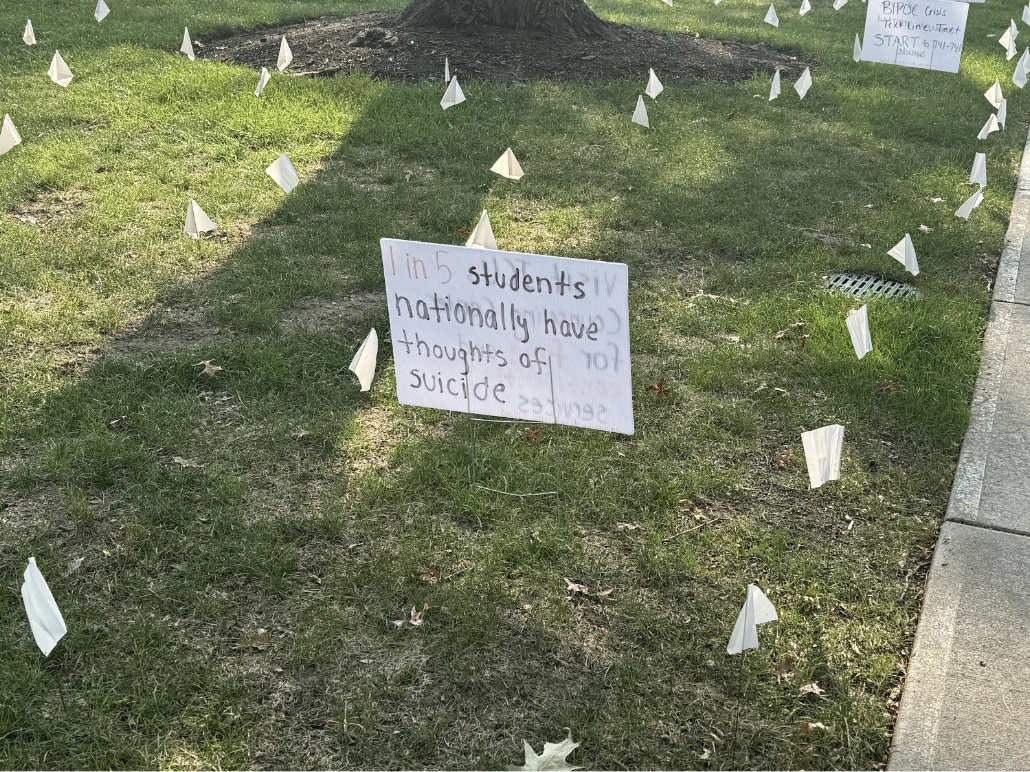
Suicide Prevention Month, recognized every September, seeks to raise awareness about this difficult topic and ignite hope. Starting conversations about suicide prevention and providing resources are key to saving lives. The hashtag, “#SuicidePreventionMonth,” serves as a reminder that starting these conversations about suicide prevention, although uncomfortable, isn’t dangerous– it’s the silence that can be lethal. By providing students, co-workers, teammates and others in our lives with the tools needed to talk about suicide prevention, many lives could be saved.
The statistics are staggering. Every year, about 24,000 U.S. college students attempt suicide and 1,100 of them do not survive. These statistics only apply to college students, not even accounting for other people in our lives, such as parents, grandparents, blue-collar workers and younger siblings.
Mental health struggles can affect any person, regardless of their background, personality, lifestyle or any other factors. Knowing the resources available to help and recognizing the signs of someone who may be struggling are imperative in today’s world.
Creating a world where talking about mental health and suicide prevention awareness is natural will help save lives and normalize the knowledge of available resources. To lower these alarming numbers not only for college students but for everyone who resides in the United States, more awareness about suicide prevention is necessary. One step at a time, though: let’s start with local awareness.
This past September, John Carroll University sought to start these difficult conversations about suicide prevention and provide awareness about resources for its students. Throughout the month, the Counseling Center and Wellness Center hosted different events.
Katherine Hahn Oh, director of the Counseling Center, spoke to The Carroll News about the various activities throughout the month. “At the individual tablings, we engaged with about 150 students. Students were able to identify their current emotion and put a sticker on the Feelings Wheel we had up. At the second tabling event, students painted Pebbles for Prevention with the 988 crisis line number on the back of the pebble. And the third tabling was an opportunity to take a brief mental health screening. Those who participated were entered to win one of three Owala water bottles! These activities helped students think about their feelings, do something to help prevent suicide and know when they should seek counseling.”
Hahn Oh indicated that the efforts of both the Counseling Center and Wellness Center are not limited to the past activities. JCU is continuing to seek the enhancement of student well-being and mental health.
She said, “John Carroll University is a JED Campus, which means we are doing extra work to ensure our policies and resources are aligned with national best practices for suicide prevention, mental health and decreasing substance misuse. A small group of faculty, staff and students (led by Hahn Oh, Lisa Brown Cornelius, Ph.D. and Martina Moore, Ph.D.) have been working on these efforts for the past few years. “One of the most significant improvements we’ve made is to have over 400 students, faculty and staff trained in QPR: Question, Persuade, Refer, which is a one-hour suicide prevention training. In September, we trained an additional 80 people on campus.”
Along with these efforts to engage students in mental health and suicide prevention awareness, JCU also offers resources to students who are struggling. Any student can walk into the Counseling Center in the back of Dolan Residence Hall and can be seen that same day. Additionally, students can schedule an appointment with the Counseling Center and can talk with a crisis counselor after hours by calling (216) 397-4283.
JCU hopes to continue to work with students and faculty alike to raise awareness for mental health and suicide prevention. For immediate help, anyone experiencing a crisis can call the 988 Suicide and Crisis Lifeline, a free and confidential support system available 24/7.