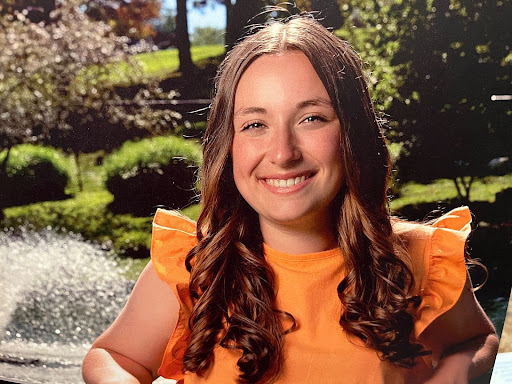
Even surrounded by friends, college can feel incredibly lonely,” a JCU senior, who wants to remain anonymous, told The Carroll News.
She is not alone in this predicament.
About 54% of 170 students surveyed at the JCU Counseling Center felt lonely some of the time due to isolation, 51% due to feeling left out by peers and 44% because of a lack of companionship. That is a significant number of students who are feeling lonely for various reasons at John Carroll and there could be more students feeling this way that were not surveyed.
Katherine Hahn Oh, director of the JCU Counseling Center, explained that this feeling can be attributed to many factors. She said that “being isolated during the pandemic impacted students’ confidence and comfort in socializing and making new friends” and “social media connection is not as deep and vibrant as in-person connection.”
Denise Ben-Porath, chair of the Psychology Department, agreed that COVID and social media had a negative impact on mental health, but that there are other factors as well.
College students are affected differently than other age groups, according to Ben-Porath. “To some extent, it feels more intense because they’re perpetually surrounded by people… so there’s this cognitive dissonance.” The polarized political climate can also cause people to feel more reserved. “It leads to more superficial conversations… and when you’re afraid to express yourself or say some of your innermost thoughts… there’s a barrier there.”
Roughly one in two adults experiences loneliness and this social disconnect can affect health just as much as smoking 15 cigarettes per day, according to the former U.S. Surgeon General Vivek Murthy. Not only that, but a study by the American Psychiatric Association found that 30% of Americans aged 18-34 feel lonely several times a week. Murthy considers loneliness an epidemic and explained that people need to come together to help dispel the feeling rather than continuing down a divided path.
The APA study also found that young people are more likely than others to turn to alcohol when they feel lonely. This could lead many college students down the road of addiction or other health problems in the future if left without help. However, there are ways to accept loneliness without feeling ashamed and work to make more connections on campus after the process of acceptance.
“Sometimes it’s okay to just allow a feeling to happen and keep going with the day,” but students can study in public spaces or “ reach out [to other students] to make their day better,” Hahn Oh said. This type of social interaction is easier on a smaller campus compared to a large one. “Those around you feel uncomfortable and lonely too.”
Ben-Porath explained that JCU’s campus can help students experiencing loneliness. “I think a smaller, more intimate, close-knit community is going to lend itself to decreasing loneliness,” where micro-moments can “boost mood.” These micro-moments are “brief but powerful interactions that shape our relationships and sense of belonging,” which can happen simply by seeing someone you know on campus and chatting briefly with them. At JCU, there is always a chance a student will see someone they know and, by interacting with them, their mood can be quickly improved.
Many people can also be discouraged when they put themselves out of their comfort zone to interact with others and are met with a negative response. “You have to stay at it in order to have success,” Ben-Porath said. She also explained students can “set manageable, concrete, tangible goals for themselves socially,” such as talking to the person next to them in class or joining a conversation in the student center.
Every college student has most likely experienced loneliness at one point in their schooling career. Whether it is a result of living in a single dorm or having a relentless schedule, loneliness is widespread for students and is isolating for many. John Carroll students are not immune to this epidemic and are struggling, especially because of the social changes in our world.
There are opportunities for students to get off campus to find community in other ways. People can join a local class at the Beachwood Community Center, volunteer for a local organization or get involved with a community group such as a book club or sports league. Even if students cannot find a connection on campus, these options offer possibilities to feel connected in the University Heights community.
John Carroll students do not have to suffer in silence. There are ways on and off campus to build meaningful connections that improve a person’s mood and the college experience. If you are experiencing loneliness, you can call the JCU Counseling Center, the 988 Suicide & Crisis Helpline or other resources below.
Resources and Help
- JCU Counseling Center – (216)-397-4283; [email protected]
- Thrive Peer Recovery Services (Cuyahoga County) – 1-877-636-3777; https://www.adamhscc.org/resources/finding-help/by-provider/thrive-peer-recovery-services
- YouthLine – (877)-968-8491; theyouthline.org
- 988 Suicide & Crisis Lifeline – 988; 988lifeline.org